
When a district replaced worn VCT with LVT and epoxy in corridors, maintenance costs dropped and slip incidents fell. You face similar choices across schools, retail, and healthcare, where durability, safety, and comfort can’t be compromises. Materials like porcelain, rubber, and antimicrobial vinyl each solve different problems, from UV exposure to rolling loads. Knowing where each performs best, and how installation and upkeep affect lifespan, can prevent costly mistakes and complaints. Here’s how to choose wisely.
Key Factors in Selecting High-Traffic Commercial Flooring

Even before you compare samples, focus on the essentials that keep high-traffic spaces performing and looking sharp: durability, maintenance, safety, aesthetics, and cost.
Start by prioritizing durable flooring that resists wear from high traffic in retail, schools, and healthcare facilities. VCT and porcelain tiles deliver proven longevity, while epoxy systems add chemical resistance and easy cleanup.
Prioritize durable flooring for high-traffic spaces. VCT, porcelain, and epoxy deliver lasting, low-maintenance performance.
Match materials to your maintenance requirements; if you need minimal downtime, choose options that don’t demand frequent polishing or stripping.
Protect people with slip-resistant textures, especially near entries, corridors, and clinical zones. Don’t sacrifice design, since luxury vinyl tiles can mimic wood or stone without giving up durability.
Ultimately, evaluate lifecycle value. Higher upfront investment can cut replacements, labor, and disruptions, delivering lower total cost over time.
Durable Options for School Corridors, Atriums, and Classrooms
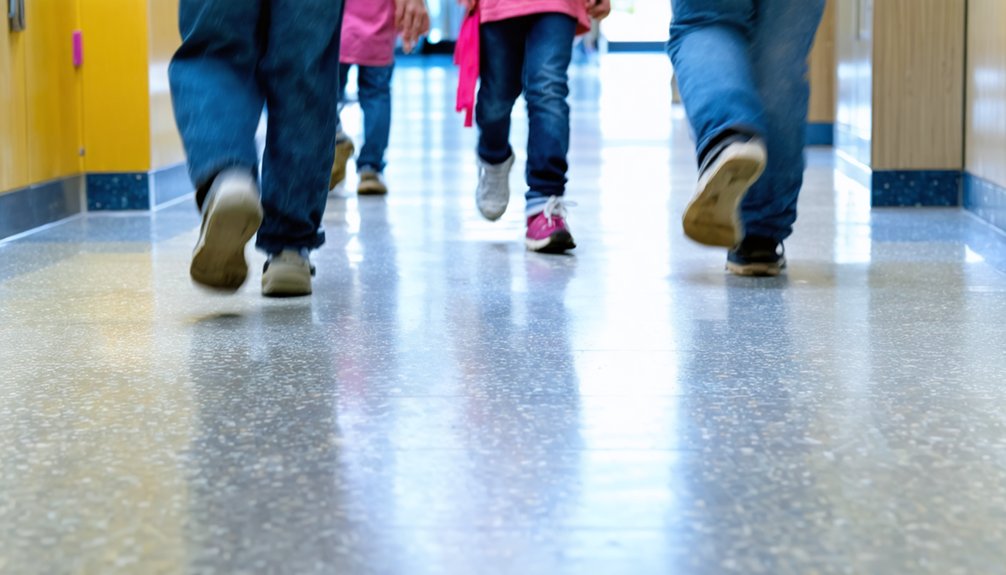
When you’re outfitting corridors, atriums, and classrooms, prioritize flooring that stands up to constant footfall while staying easy to clean and safe.
In high-traffic areas, epoxy systems are durable options that resist abrasions and simplify maintenance. A continuous, multi-coat resin build reduces seams, limits dirt traps, and delivers a seamless, anti-slip surface. Decorative multi-colored flake or glitter finishes can add visual interest without sacrificing performance.
For classrooms, luxury vinyl tile (LVT) offers durability, comfort underfoot, and the look of wood or stone at a sensible cost. It’s easy to clean and holds up to daily wear.
Maintain all surfaces with routine sweeping and periodic deep cleans to enhance lifespan. This guidance also translates well to any healthcare facility.
UV-Stable and Anti-Slip Solutions for Sunlit and Outdoor Areas
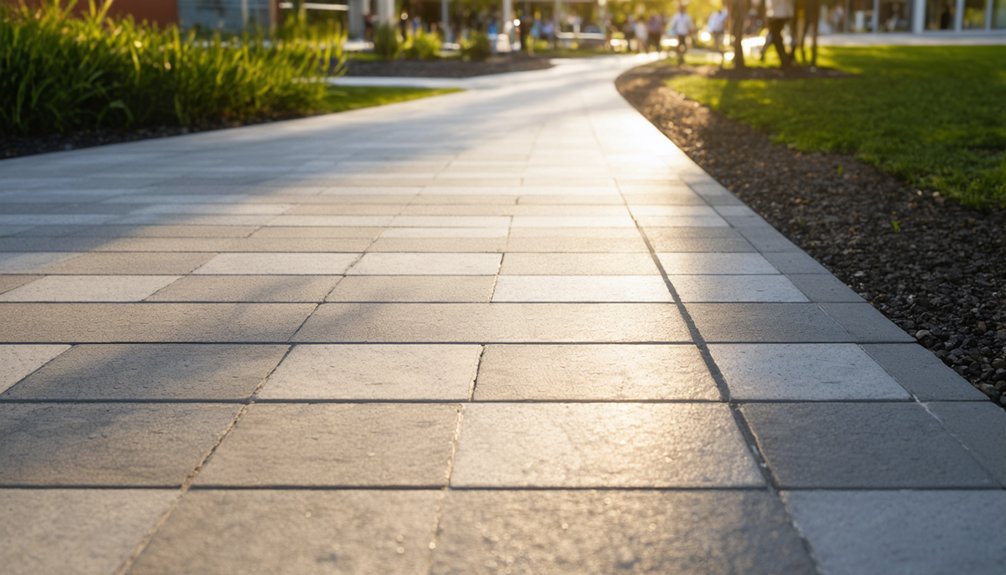
Although sunlit atriums and outdoor walkways improve a space, they also demand flooring that won’t fade, chalk, or turn slippery. You need UV-stable flooring solutions such as polyaspartic resin systems that resist UV degradation and maintain color in direct sunlight.
Sunlit spaces need UV-stable floors. Polyaspartic systems resist fading, chalking, and slipperiness in direct light.
Pair that with verified anti-slip properties to keep students, staff, and visitors safe in wet and dry conditions across high-traffic zones.
Choose multi-coat resin builds with decorative flakes to deliver durable surfaces that are seamless, attractive, and easy to maintain. These systems stand up to heavy footfall without sacrificing grip or aesthetics.
Because polyaspartics have a short pot life, rely on skilled applicators for efficient installation and a consistent finish. The result: UV stability, dependable traction, and long-term performance that meets safety and design requirements.
Retail Flooring That Balances Aesthetics and Wear Resistance
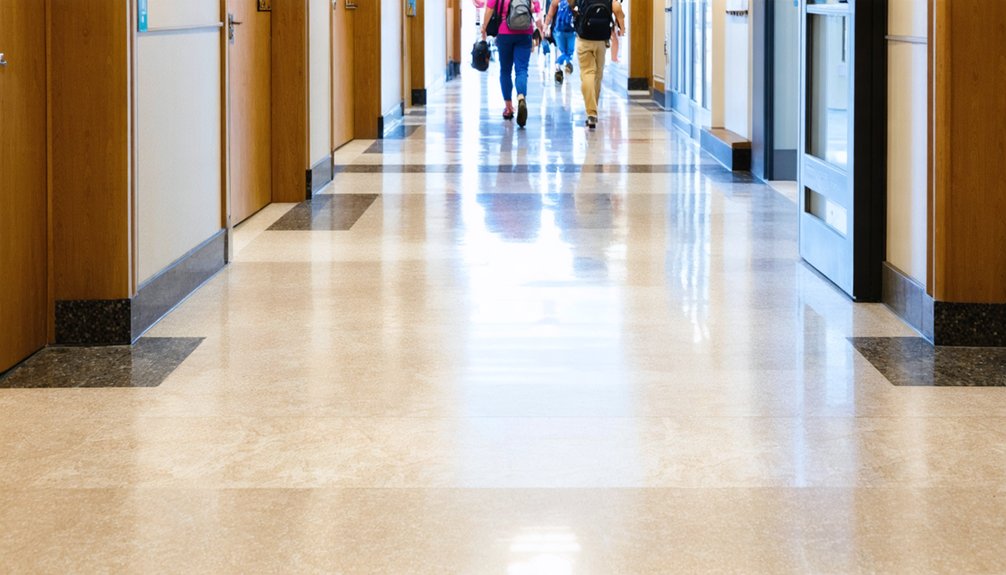
Two priorities drive retail flooring choices: standout visuals and long-term wear.
You need materials that attract customers, withstand heavy traffic, and stay easy to maintain. Luxury vinyl tile delivers natural-look wood or stone without the upkeep, and it resists scratches and stains from carts and heels.
Porcelain tile offers top-tier wear resistance and color-through durability, so aisles keep their crisp look even under constant footfall.
Use carpet tiles to add warmth, zoning, and acoustic control; when a section stains, swap individual tiles and keep the space fresh.
Rubber flooring works where cushioning and noise reduction matter, offering slip resistance and comfort for long shifts.
Combine these options to align brand identity with toughness. Retail flooring should enhance the shopping experience and endure daily rigors.
Healthcare Flooring Priorities: Safety, Hygiene, and Comfort

Retail spaces chase standout visuals and durability, but healthcare floors raise the stakes with patient safety, infection control, and comfort.
You need slip-resistant surfaces that reduce falls in high-traffic corridors, patient rooms, and nurses’ stations. Prioritize hygiene with antimicrobial materials that resist stains and spills, limiting bacterial growth and simplifying cleanups.
For comfort, choose rubber or luxury vinyl tile to add cushioning that eases staff fatigue and supports patient mobility during long stays.
Durability matters, too. Vinyl composite tile and polished concrete handle rolling loads, heavy footfall, and frequent sanitizing while maintaining appearance.
Look for products with verified sustainability, such as low-VOC content and LEED-friendly attributes, without compromising safety or hygiene.
Specify cove bases and tight seams to minimize dirt traps, and select color-contrasted connections that aid wayfinding and reduce trip risks.
Resin and Epoxy Systems: Seamless, Cleanable, and Long-Lasting
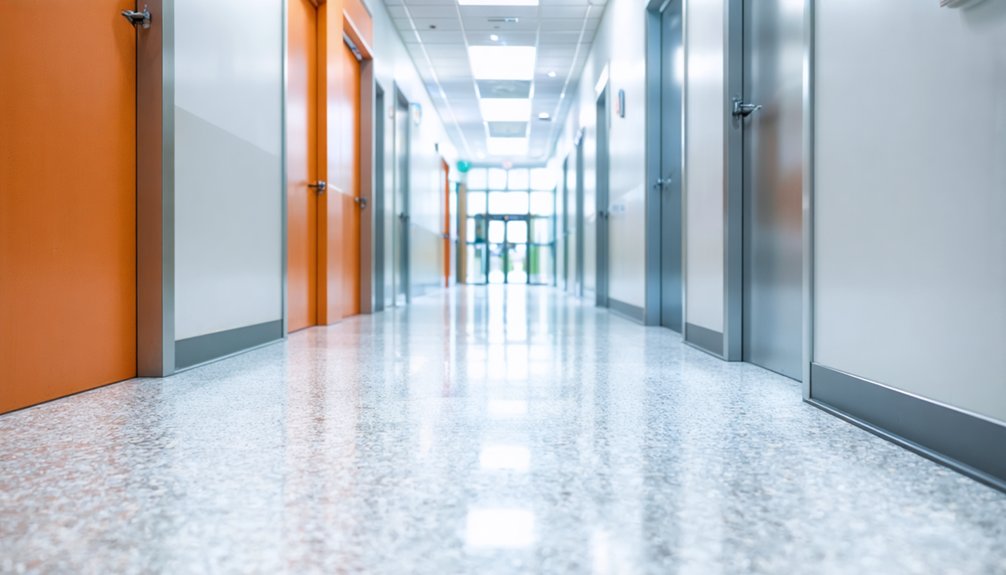
When you need a seamless surface that won’t trap dirt or moisture, resin and epoxy systems deliver a continuous, joint-free floor that cleans fast and looks sharp. You get fewer harborage points, faster turnovers, and better hygiene, making them ideal for high-traffic schools, clinics, labs, and retail.
These durable commercial flooring options resist heavy footfall, abrasion, and chemical spills, making them ideal for demanding environments. Customize the look with colored flake or glitter to add visual appeal without sacrificing performance.
Durable floors resist heavy traffic and chemicals, with customizable flake or glitter options that add style without compromising performance.
To get it right, rely on skilled installers. Epoxies demand meticulous surface prep, and polyaspartics have short pot life.
Many systems are solvent-free or water-based, supporting healthier indoor air and sustainability by lasting longer and reducing landfill waste.
Comparing LVT, Terrazzo, Quarry Tile, and Polished Concrete

Although each surface shines in different settings, comparing LVT, terrazzo, quarry tile, and polished concrete helps you match performance to purpose.
If you need versatility and budget control, choose LVT. It handles scratches and moisture, installs quickly, and fits schools and retail where design variety matters.
Pick terrazzo when you want top-tier durability and custom aesthetics across large areas; its high upfront cost typically pays off beyond about 2,500 square feet.
Use quarry tile for kitchens, corridors, and back-of-house zones. It’s hard-fired, resists spills and grease, and delivers value, though color and pattern options are limited.
Select polished concrete for modern retail and warehouses; it’s durable, low-maintenance, and accepts stains or dyes for a sleek, customizable look.
Maintenance Practices to Extend Flooring Lifespan
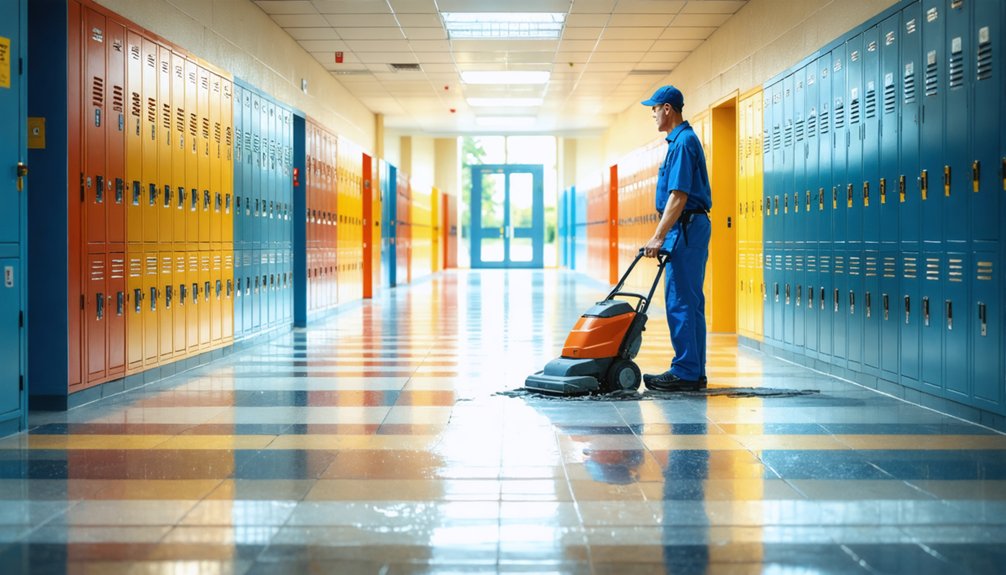
Even the toughest floors last longer with a simple, consistent care plan. Match maintenance practices to your flooring needs and building use.
In high-traffic areas, sweep or vacuum daily to remove grit that causes scratches and premature wear. Schedule periodic deep cleaning using the right method: pH‑neutral cleaners for vinyl, and specialized extraction or encapsulation for carpet tiles to maintain appearance and hygiene.
Act fast on spills and stains. Immediate cleanup prevents permanent damage and reduces slip risks in schools, retail, and healthcare.
Build a documented floor care program that includes routine inspections and re-applying protective sealers or coatings where appropriate to extend flooring lifespan.
Train staff on proper footwear, walk-off mats, and minimizing abrasive materials so surfaces stay durable, safe, and attractive.
Sustainability Considerations and Low-Odor Installations
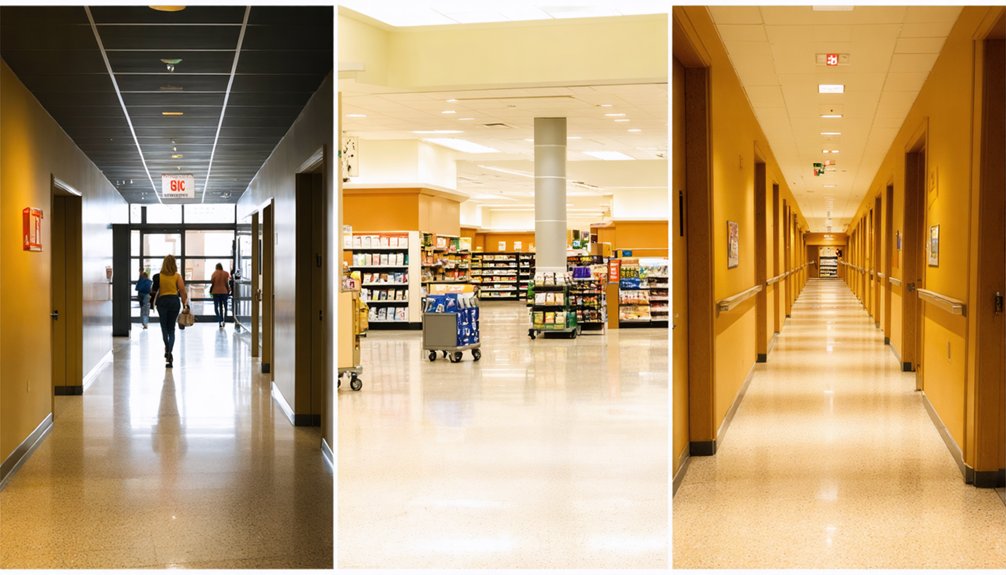
From planning through installation, choose flooring systems that cut environmental impact without sacrificing performance.
Prioritize sustainability with flooring solutions that use recycled content, reduce chemicals, and last longer, especially in healthcare where patient and staff well-being matter.
Low-odor installations using solvent-free, water-based products protect indoor air quality in schools, clinics, and retail during fast turnarounds.
Specify anti-slip, seamless surfaces to lower maintenance and cleaning chemicals.
Opt for UV-stable, durable resin systems that deliver aesthetics and longevity.
Select sustainable flooring materials to support carbon neutrality and improve healthcare outcomes.
Use recycled rubber to capture LEED credits and demonstrate circular practices.
Require low-odor installations to keep spaces operational and comfortable.
Choose seamless, anti-slip floors to reduce harsh detergents and water use.
- Favor long-life, UV-stable decorative resins for durable, low-maintenance performance.
Budgeting, Value Engineering, and Installation Best Practices

Sustainable choices only pay off when you plan the numbers and the install with the same rigor.
Start with disciplined budgeting that goes beyond upfront price. Model lifecycle costs: long-term maintenance, durability, and replacement windows for high-traffic zones in schools, retail, and healthcare.
Use value engineering to compare equivalent systems and methods. Swap materials only when performance, safety, and cleanability remain intact. Ask vendors for alternates with proven wear ratings and warranty parity.
Follow installation best practices relentlessly. Verify moisture, levelness, and cleanliness of the substrate; document prep steps.
For epoxy or polyaspartic coatings, hire certified crews. Improper mixing, temperature control, or cure times can trigger failures.
Plan maintenance into the budget: scheduled cleaning, reseals, and inspections that preserve slip resistance, appearance, and service life.

